

Life Guidance through Heaven and Hell
Alexander: “I love you!” – Anna: “I love you!” – An introductory exchange of words in a near-future society in which only what is desirable and productive appears possible. Words of love therefore mean no more than the lyrics of children’s songs: “I will become better than myself, I reach for the limit. Everyone has a choice-that is optimal.” In a restaurant we hear Anna, a physician and the hero’s wife, say: “The accountant can’t keep his jobs, […] his anxiety keeps making him fail again and again, […], I can’t tell him that the rest housing isn’t looming-it is looming.”- “The unbearable lightness of being-from the life of a minimum-benefit recipient,”[1] a fellow diner quips.
Not yet four minutes into the film, miniature by miniature, we learn the tripartite order of tomorrow’s world: high performers lead lives of prosperity – “the middle”. Those who fall behind face the rest housing (Schalfburgen in German) – “hell”. A non-place erased from all maps (we will recognize Vienna’s Karl-Marx-Hof[2]), where minimum-benefit recipients dwell, take psychopharmaceuticals, and receive the consolation of the Church. Above it all lies the true heaven-beyond the society of work.
Someone must have slandered Alexander (played by Fritz Karl), for one morning – without having done anything wrong – he is visited at home by his Life Guide. Alexander’s wife Anna urges him not to take it lightly: the support of the Life Guidance agency cannot be refused. Measures – an art-therapy group is shown – must be attended. There is no legal recourse against the agency’s rating. If Level 5 is assigned, banishment to the rest housing follows.
Alexander decides to fight the verdict of Life Guidance. His actions do not go unnoticed. His Guide summons him to a film screening at which a fragment of Alexander’s unconscious is projected onto the screen. The agency knows everything.
When Alexander realizes that his wife has been spying on him on behalf of Life Guidance, he runs amok. He beats an employee of the company and goes in search of other dreams that have been taken from him. He penetrates the forbidden zone of the rest housing, almost begins an affair, learns of his father’s death, and in boundless rage drives uphill toward a patch of Viennese woodland called “Am Himmel” (“In Heaven”). There he seeks answers from those who truly hold power. Abruptly, he stumbles into a hunting party of the super-rich – men only (the notorious arms lobbyist Mensdorff-Pouilly and husband of a former Austrian minster plays himself) – and is invited to join them for a snack.
There Alexander stands like a choirboy while the elderly gentlemen mock the dissatisfaction of the performance class. When Alexander protests, “You have installed a murderous system…!” they sneer: “Complain to the ombudsman!”, “Now you’ve got everything you wanted: non-smoking, all-you-can-fuck, no trans fats, margins for your pension provision, rooftop terraces with panoramic views!”, “Noble brands for everyone, stitched by children’s hands!”, “Income without working, garden parties with people you don’t even know!”, “Traffic calming!”, “Citizen participation projects!”, “Coffee capsules!”, “You believed you could increase your capital without working!”
The truth weighs heavily. On his way back, Alexander knocks down his Life Guide, returns home, and flees into the marital bed. We hear Alexander’s “I love you,” answered by Anna’s “I love you.”
As is often the case in dystopias, what is missing matters as much as what is shown. The society of the future has stripped individuals of all aggression-of every rebellion against imposition, every attempt to reach for what is truly desired. Anyone who shows aggression sins against the optimum. Without giving form to one’s own wishes-without the risk of receiving a “no”-there can be no exchange, no shape, no relationship. Life-love-remains empty.
There is no chain of appeal against the Life Guidance agency; the individual cannot contest its rulings. More decisive still: the collective has been abolished. Alexander has no friends, no colleagues, no parish, no chamber, no union, no party-he belongs to the white upper middle class, but in truth he belongs nowhere. The political has been erased.
Work itself becomes invisible when everything is subordinated to work. Wherever the film shows working people – the speculators, kindergarten teachers, waiters, guards, psychiatrists, receptionists, counsellors – it always seems as if no one is actually working; everything happens as if by itself. Work is deprived of any social recognition; everything conflictual within it – every form of suffering through it – is made to disappear.
The employment service of the future uses our dreams against us; it knows everything, discovers our need to be aggressive as well as our wish to make reparations. We are not only good – the system exploits that. The fear that oedipal rivalry – seen in Alexander’s dream images: the son conspiring with the mother against the father – and raging jealousy – a dream about the son suffocating his newborn sibling – might get out of hand invites submission. Estranged from our emotional lives, every action driven by affect produces nausea; in the dystopia, representatives of the helping professions-the physician, the psychiatrist, the therapist, the Life Guide-become perpetrators. They do not help us; they sustain the system.
The unconscious and its conflicts themselves generate the disposition – the defensive organisation – that capitalism can exploit. Those who rule (in heaven) have reason to laugh-for those who are subjected (in hell) want it that way! The optimum flatters individual narcissism, shielding us from feelings such as dependence, envy, rage, hatred, and grief. As long as possible, a perfect life-then the plunge into nothingness.
The dystopian society is immune to individual revolt: Alexander’s break-in at Life Guidance headquarters and even his attempted murder are not punished but treated as if they had never happened. Alexander gets away with it because he chooses to go on living as though nothing had occurred. Individual insight changes nothing-not even for one’s own life.
Ruth Mader’s film is hard work and it deserves its place in the history of work on film. The quality of its dystopia lies in the fact that its truth is so difficult to endure.
Günter Hefler works on issues of lifelong learning and adult development in international comparison at 3s in Vienna. Cinema is an especially important source of inspiration for him.
[1] All translations by the author, not from English subtitles.
[2] The Karl-Marx-Hof—opened in 1930 with 748 housing units and extensive green spaces—is the largest contiguous residential complex in the world and the quintessential symbol of public housing in “Red Vienna”. https://www.visitingvienna.com/culture/karl-marx-hof/
Life Guidance, Ruth Mader, AT 2017
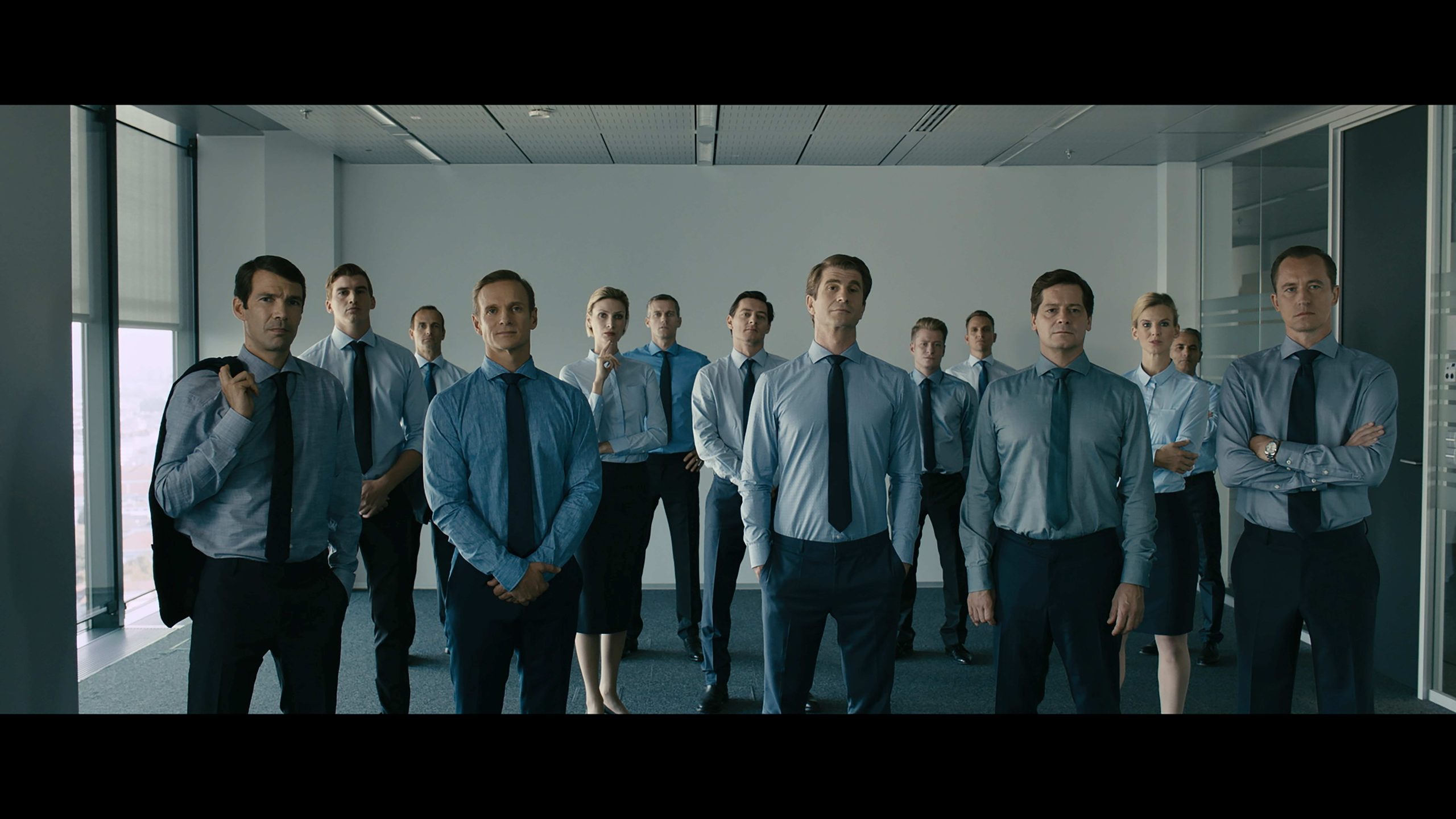
Filmstill, Life Guidance, AT 2017
© KGP Filmproduktion GmbH

Filmstill, Life Guidance, AT 2017
© KGP Filmproduktion GmbH
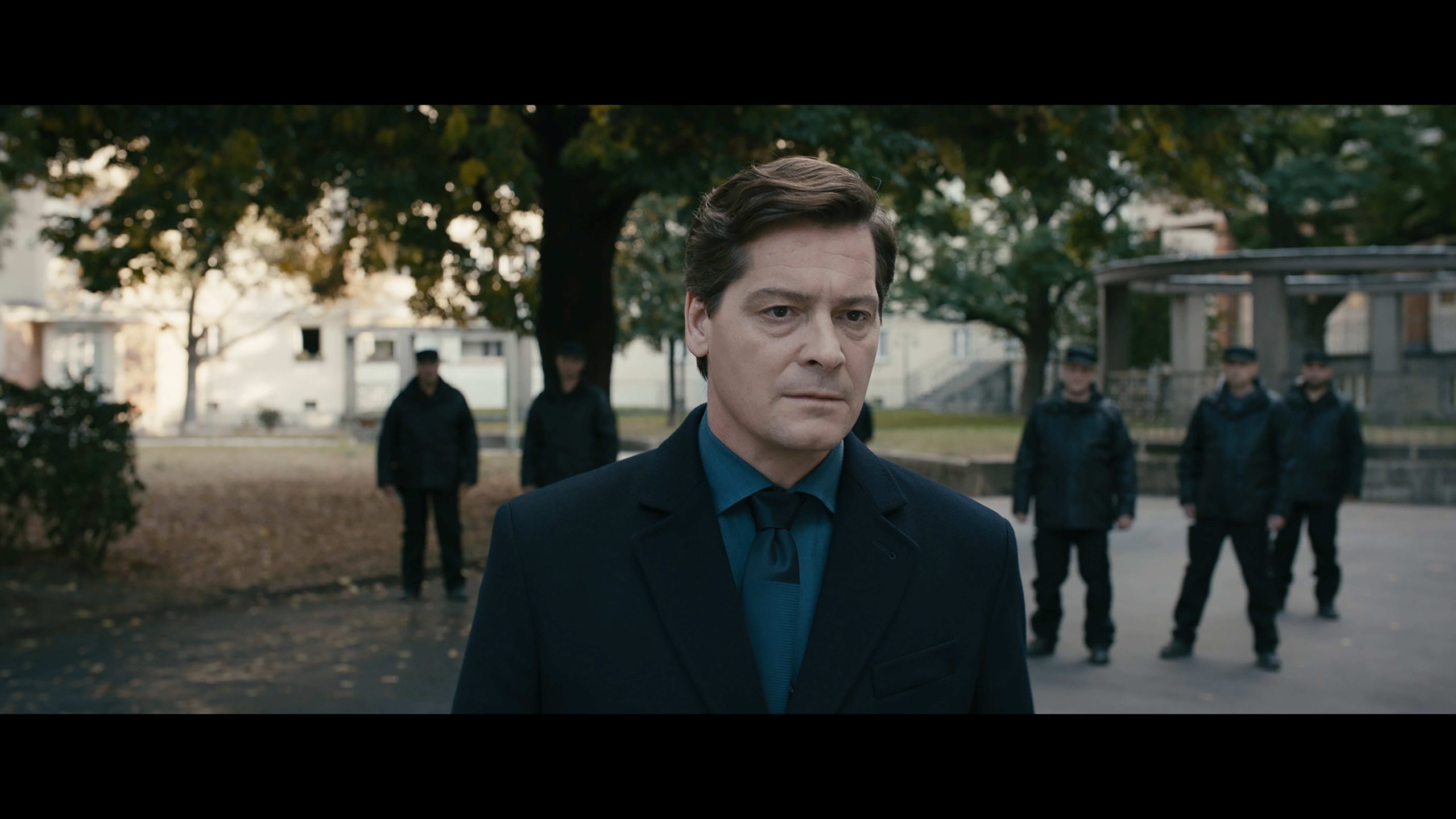
Filmstill, Life Guidance, AT 2017
© KGP Filmproduktion GmbH

Filmstill, Life Guidance, AT 2017
© KGP Filmproduktion GmbH

Filmstill, Life Guidance, AT 2017
© KGP Filmproduktion GmbH
Life Guidance through Heaven and Hell
Alexander: “I love you!” – Anna: “I love you!” – An introductory exchange of words in a near-future society in which only what is desirable and productive appears possible. Words of love therefore mean no more than the lyrics of children’s songs: “I will become better than myself, I reach for the limit. Everyone has a choice-that is optimal.” In a restaurant we hear Anna, a physician and the hero’s wife, say: “The accountant can’t keep his jobs, […] his anxiety keeps making him fail again and again, […], I can’t tell him that the rest housing isn’t looming-it is looming.”- “The unbearable lightness of being-from the life of a minimum-benefit recipient,”[1] a fellow diner quips.
Not yet four minutes into the film, miniature by miniature, we learn the tripartite order of tomorrow’s world: high performers lead lives of prosperity – “the middle”. Those who fall behind face the rest housing (Schalfburgen in German) – “hell”. A non-place erased from all maps (we will recognize Vienna’s Karl-Marx-Hof[2]), where minimum-benefit recipients dwell, take psychopharmaceuticals, and receive the consolation of the Church. Above it all lies the true heaven-beyond the society of work.
Someone must have slandered Alexander (played by Fritz Karl), for one morning – without having done anything wrong – he is visited at home by his Life Guide. Alexander’s wife Anna urges him not to take it lightly: the support of the Life Guidance agency cannot be refused. Measures – an art-therapy group is shown – must be attended. There is no legal recourse against the agency’s rating. If Level 5 is assigned, banishment to the rest housing follows.
Alexander decides to fight the verdict of Life Guidance. His actions do not go unnoticed. His Guide summons him to a film screening at which a fragment of Alexander’s unconscious is projected onto the screen. The agency knows everything.
When Alexander realizes that his wife has been spying on him on behalf of Life Guidance, he runs amok. He beats an employee of the company and goes in search of other dreams that have been taken from him. He penetrates the forbidden zone of the rest housing, almost begins an affair, learns of his father’s death, and in boundless rage drives uphill toward a patch of Viennese woodland called “Am Himmel” (“In Heaven”). There he seeks answers from those who truly hold power. Abruptly, he stumbles into a hunting party of the super-rich – men only (the notorious arms lobbyist Mensdorff-Pouilly and husband of a former Austrian minster plays himself) – and is invited to join them for a snack.
There Alexander stands like a choirboy while the elderly gentlemen mock the dissatisfaction of the performance class. When Alexander protests, “You have installed a murderous system…!” they sneer: “Complain to the ombudsman!”, “Now you’ve got everything you wanted: non-smoking, all-you-can-fuck, no trans fats, margins for your pension provision, rooftop terraces with panoramic views!”, “Noble brands for everyone, stitched by children’s hands!”, “Income without working, garden parties with people you don’t even know!”, “Traffic calming!”, “Citizen participation projects!”, “Coffee capsules!”, “You believed you could increase your capital without working!”
The truth weighs heavily. On his way back, Alexander knocks down his Life Guide, returns home, and flees into the marital bed. We hear Alexander’s “I love you,” answered by Anna’s “I love you.”
As is often the case in dystopias, what is missing matters as much as what is shown. The society of the future has stripped individuals of all aggression-of every rebellion against imposition, every attempt to reach for what is truly desired. Anyone who shows aggression sins against the optimum. Without giving form to one’s own wishes-without the risk of receiving a “no”-there can be no exchange, no shape, no relationship. Life-love-remains empty.
There is no chain of appeal against the Life Guidance agency; the individual cannot contest its rulings. More decisive still: the collective has been abolished. Alexander has no friends, no colleagues, no parish, no chamber, no union, no party-he belongs to the white upper middle class, but in truth he belongs nowhere. The political has been erased.
Work itself becomes invisible when everything is subordinated to work. Wherever the film shows working people – the speculators, kindergarten teachers, waiters, guards, psychiatrists, receptionists, counsellors – it always seems as if no one is actually working; everything happens as if by itself. Work is deprived of any social recognition; everything conflictual within it – every form of suffering through it – is made to disappear.
The employment service of the future uses our dreams against us; it knows everything, discovers our need to be aggressive as well as our wish to make reparations. We are not only good – the system exploits that. The fear that oedipal rivalry – seen in Alexander’s dream images: the son conspiring with the mother against the father – and raging jealousy – a dream about the son suffocating his newborn sibling – might get out of hand invites submission. Estranged from our emotional lives, every action driven by affect produces nausea; in the dystopia, representatives of the helping professions-the physician, the psychiatrist, the therapist, the Life Guide-become perpetrators. They do not help us; they sustain the system.
The unconscious and its conflicts themselves generate the disposition – the defensive organisation – that capitalism can exploit. Those who rule (in heaven) have reason to laugh-for those who are subjected (in hell) want it that way! The optimum flatters individual narcissism, shielding us from feelings such as dependence, envy, rage, hatred, and grief. As long as possible, a perfect life-then the plunge into nothingness.
The dystopian society is immune to individual revolt: Alexander’s break-in at Life Guidance headquarters and even his attempted murder are not punished but treated as if they had never happened. Alexander gets away with it because he chooses to go on living as though nothing had occurred. Individual insight changes nothing-not even for one’s own life.
Ruth Mader’s film is hard work and it deserves its place in the history of work on film. The quality of its dystopia lies in the fact that its truth is so difficult to endure.
Günter Hefler works on issues of lifelong learning and adult development in international comparison at 3s in Vienna. Cinema is an especially important source of inspiration for him.
[1] All translations by the author, not from English subtitles.
[2] The Karl-Marx-Hof—opened in 1930 with 748 housing units and extensive green spaces—is the largest contiguous residential complex in the world and the quintessential symbol of public housing in “Red Vienna”. https://www.visitingvienna.com/culture/karl-marx-hof/
Life Guidance, Ruth Mader, AT 2017
Filmstill, Life Guidance, AT 2017
© KGP Filmproduktion GmbH
Filmstill, Life Guidance, AT 2017
© KGP Filmproduktion GmbH
Filmstill, Life Guidance, AT 2017
© KGP Filmproduktion GmbH
Filmstill, Life Guidance, AT 2017
© KGP Filmproduktion GmbH
Filmstill, Life Guidance, AT 2017
© KGP Filmproduktion GmbH


Labour Struggles on Screen: Stéphane Brizé & Vincent Lindon’s Work Trilogy
Brizé’s gripping work trilogy—The Measure of a Man (2015), At War (2018), and Another World (2021)—all starring French powerhouse Vincent Lindon, stands as one of the most compelling cinematic explorations of labour markets in today’s capitalism. A discussion about his thought-provoking films in this forum has long been overdue.

„Is it worth the pay?“ – A German short film series about professions & money.
The short film series ‘Lohnt sich das?‘ (Is it worth the pay?) by Bayrischer Rundfunk (BR) offers support to teenagers and young adults in their future career choices, from glaziers to auditors, and entices viewers with the central question: How much do you actually earn?

The Men of God’s Wonderful Railway
From the hard work in the engineering industry to the comfort of a consumer driven world – a comparison of two contrasting television reports shows this economic shift - in a nutshell.

Samurai of the loo
In Perfect Days (2023), Wim Wenders achieves the seemingly impossible. With the help of The Tokyo Toilet project and through the depiction of an antihero-hero, he crafts the ethos of a toilet cleaner.
The De-Subjectivating Power of Cinematic Images, or Becoming-Class at the Movies
The work of art is to dominate the spectator: the spectator is not to dominate the work of art. The spectator is to be receptive. He is to be the violin on which the master is to play. (Oscar Wilde, The Soul of Man Under Socialism)

The „Individual Responsibility“ Con
The beautiful, angry gig-economy comedy "Do not Expect Too Much from the End of the World" (2023, Radu Jude) doesn't have to look far for exploitative conditions in Bucharest, but finds them en-route in a production assistant's car.

About this blog
By selecting a film or an image, this blog literally illustrates the vast sphere of work, employment & education in an open collection of academic, artistic and also anecdotal findings.
About us
Konrad Wakolbinger makes documentary films about work and life. Jörg Markowitsch does research on education and work. They are both based in Vienna. Information on guest authors can be found in their corresponding articles.
More about
Interested in more? Find recommendations on relevant festivals, film collections and literature here.
About this blog
With picking a film or an image, this blog literally illustrates the vast sphere of work, employment & education in an open collection of academic, artistic and also anecdotal findings.
About us
Konrad Wakolbinger makes documentary films about work and life. Jörg Markowitsch does research on education and work. We both work in Vienna. Information on guest authors can be found in their respective articles.
More about
Interested in more? Find recommendations on relevant festivals, film collections and literature here.